

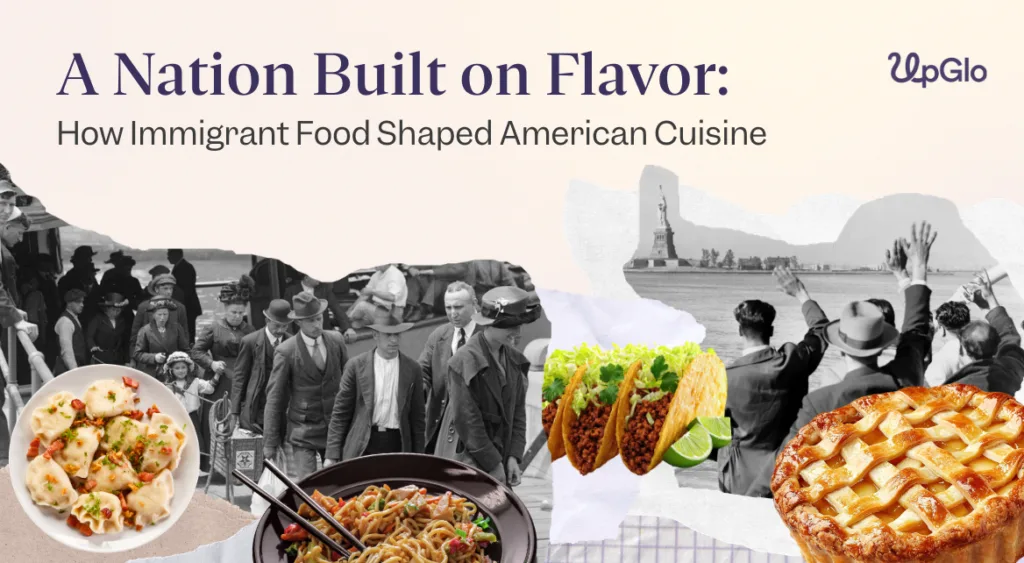
Food represents culture, identity, and a sense of belonging. It’s that recipe handed down from generation to generation, an heirloom that transports you back through time and space with every bite.
Certain foods have become synonymous with U.S. culture, but how many of us realize that these staple dishes have immigrant origins?
These dishes tell stories far beyond what’s on the plate: stories of journeys taken, cultures blended, and traditions preserved in new places. They are reflections of flavors from home and adapted to a new land. Over time, these foods became woven into the fabric of American life. As we explore 11 popular, beloved dishes, we invite you to see them not just as “American food” but as reminders of how immigrants have and continue to shape our shared culture.
If you’d like to make just a few of the recipes that have been brought to the U.S. by immigrant communities, we invite you to check out UpGlo’s Community Cookbook, where we’ve compiled recipes from our staff, alumni, and jobseekers.
Spaghetti
Spaghetti has its roots in Italy, where pasta has been a staple for centuries. Still, it became widely popular in the United States through Italian immigrants who brought their recipes and traditions with them in the late 19th and early 20th centuries. As these communities adapted their dishes to available ingredients, spaghetti with tomato sauce evolved into a hearty, affordable meal that eventually found its way from family kitchens to restaurants and dinner tables nationwide.
Bagels (with lox and cream cheese)
For so many of us in the U.S., particularly in cities like New York, it’s a standard morning tradition to head to a deli and order a bagel with lox and cream cheese. But the next time you bite into a bagel, we invite you to think of the Jewish immigrants who brought them here from Eastern Europe in the late 19th and early 20th centuries. In New York City, the pairing of bagels with cream cheese and lox took hold as Jewish delis flourished, eventually becoming a beloved American breakfast staple.
Chow Mein
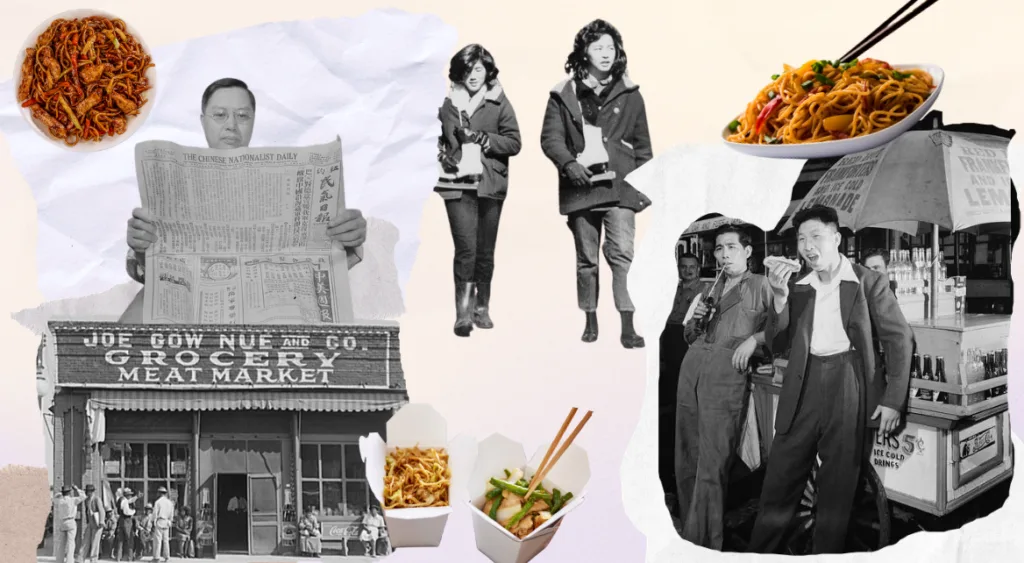
Chow mein originated in Chinese cuisine as stir-fried noodles and was brought to the United States by Chinese immigrants in the late 19th and early 20th centuries. As Chinese cooks adapted the dish to local ingredients and American tastes, chow mein became a staple of Chinese American restaurants and one of the most popular takeout dishes.
Tacos
Taco Tuesday is an American pop tradition. But as many of us know, we have Mexican immigrant communities to thank whenever we order some Al Pastor or Pollo Asado. Tacos have deep roots in Indigenous Mexican cuisine, dating back thousands of years, and were brought to the United States through Mexican communities long before they became mainstream American fare. As Mexican immigrants shared these foods and adapted them to regional tastes and ingredients, tacos spread beyond border states, eventually inspiring national franchises like Taco Bell.
Frankfurter (Hot Dog)
The frankfurter’s roots begin in Germany, where seasoned sausages were popular long before arriving in the United States with German immigrants in the 19th century. Rebranded as the hot dog, it became an American icon through ballparks, street carts, and fairs, transforming an Old World sausage into a beloved symbol of American leisure and celebration.
Pizza
Pizza originated in Italy, particularly in Naples, and was brought to the United States by Italian immigrants in the late 19th and early 20th centuries. As the dish adapted to American tastes, with larger portions, new toppings, and regional styles, it moved from neighborhood pizzerias to nationwide franchises like Pizza Hut and Domino’s, becoming one of the most popular and recognizable American foods today.
Sushi
Sushi originated in Japan and was brought to the U.S. by Japanese immigrants in the 20th century. As American palates embraced it, especially through innovations like the California roll, sushi moved from niche restaurants to mainstream menus, becoming a popular and widely enjoyed American dining experience.
Shish kabob
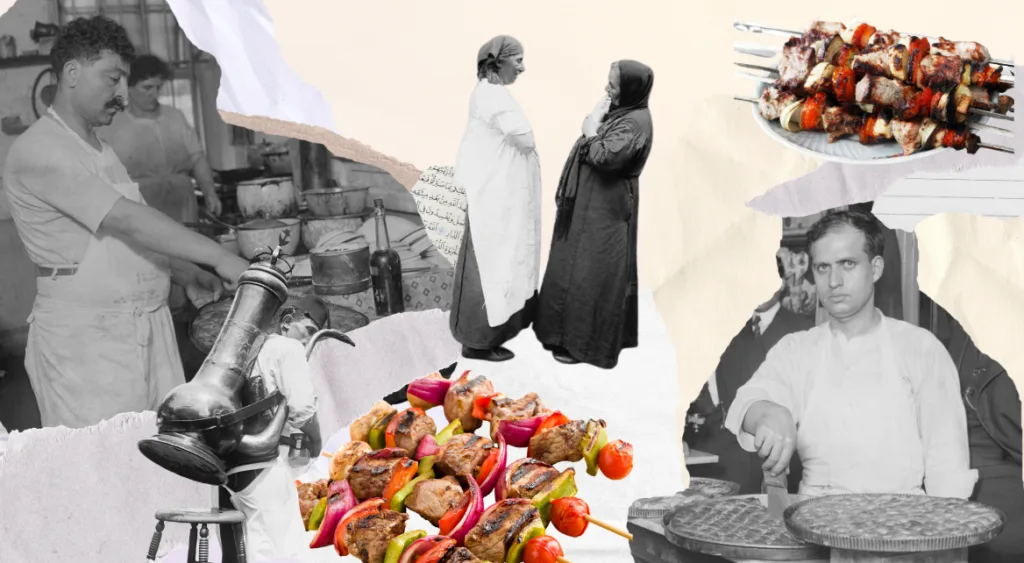
In Middle Eastern and Mediterranean traditions, skewered and grilled meats have been prepared for centuries. Introduced to the United States by immigrants from these regions, shish kabobs became popular through barbecues and restaurants, evolving into a familiar American dish associated with outdoor grilling and shared meals.
Hamburger
The hamburger traces its origins to Germany and was brought to the United States by German immigrants in the 19th century. Once placed between a bun for convenience, it quickly became a favorite at barbecues and diners, and later the foundation of American fast food, powering global franchises like McDonald’s, Burger King, and Wendy’s into household names.
Apple Pie
How many of us have heard the phrase “American as apple pie?” Well, we have immigrants to thank for this iconic American staple, with its roots in European baking traditions from countries like England and the Netherlands. Brought to the States by European settlers and adapted to the abundance of apples in America, their early apple-based desserts eventually became what we know as a classic American recipe.
Pierogi
Brought to the U.S. by Eastern European immigrant communities, pierogi became a staple in cities like Chicago, Cleveland, Detroit, and Pittsburgh. These dumplings, filled with either potato, cheese, or meat, are now beloved at diners, festivals, and family tables across America. They exemplify how immigrant food traditions don’t just survive; they become regional American favorites.
–
Altogether, these dishes remind us that American food, at its heart, is shaped by the courage to carry tradition into new places. To continue the journey, we encourage you to explore UpGlo’s Community Cookbook, a collection of recipes and stories from our community that honor the flavors, heritage, and lived experiences immigrants bring to the table every day. Don’t forget to tag us on social and share a photo of the dishes you prepared from our cookbook.